Best AI Sales Prospecting Tools 2026: Software Compared
Posted On: July 26, 2026
Last updated: August 2026 · Written by Luca Controlo, Content Marketing Specialist · Reviewed by Rodi Taze, Co-Founder of AI Workforce
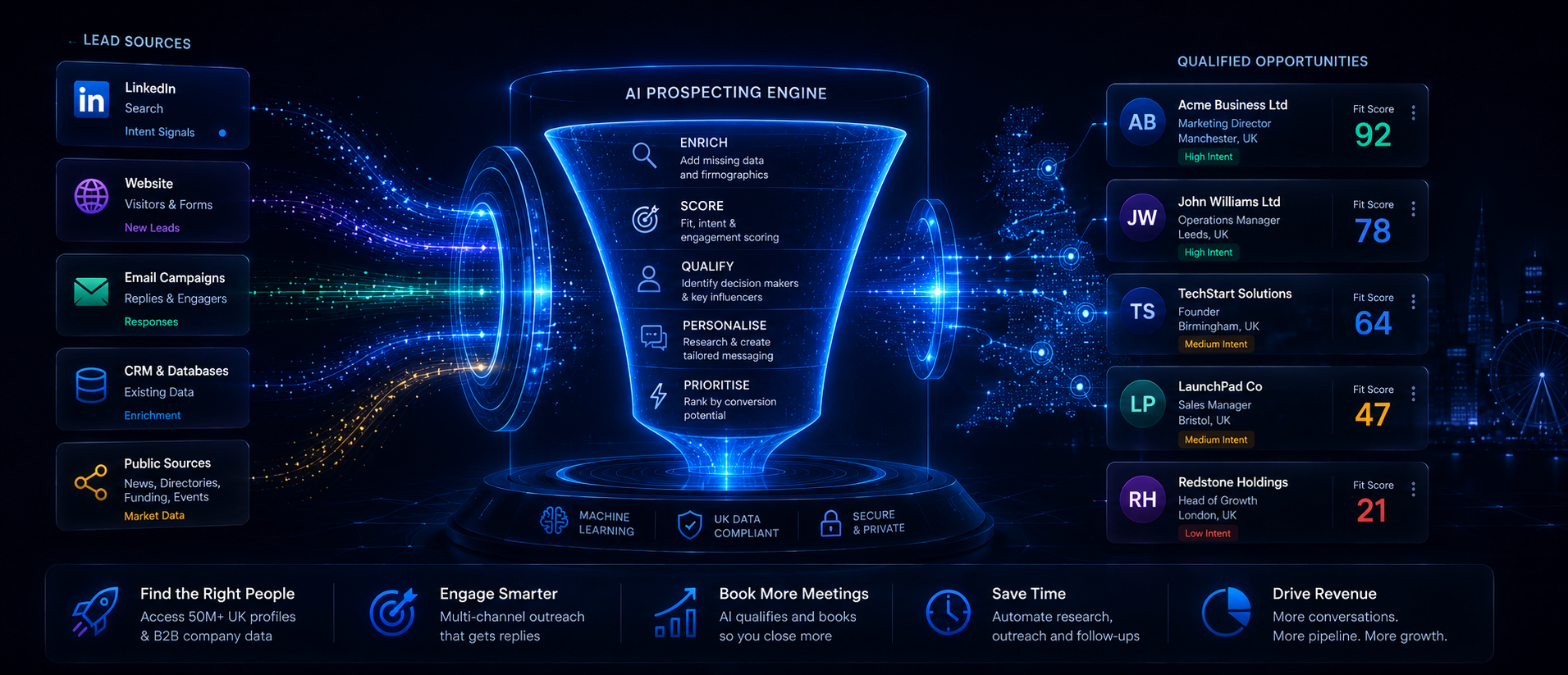
This guide compares leading AI sales prospecting tools by the job they perform, including account discovery, decision-maker research, enrichment, signal detection and UK suitability. There is no single best tool: the right choice depends on your data sources, your existing CRM, your budget and how much of the research step you want automated versus recommend-only.
Quick Answer: There is no single best AI sales prospecting tool for every business. LinkedIn Sales Navigator suits businesses that want LinkedIn-native account and stakeholder discovery. Apollo suits teams wanting an accessible, all-in-one contact database with built-in prospecting and outreach. Clay suits teams that want to build custom, multi-source enrichment and research workflows rather than use a fixed product. Cognism suits UK and European teams that need verified mobile numbers and compliance-first data. UserGems suits teams prioritising job-change and relationship signals for account-based prospecting. HubSpot's Breeze Prospecting Agent suits HubSpot customers who want prospecting built into the CRM they already use. The comparison below checks each candidate against current public documentation and pricing, not hands-on testing, unless stated otherwise.
New to the category? Read our guide to how AI sales prospecting works for the full explanation of what AI prospecting is, how it identifies accounts and contacts, and how it fits alongside lead generation, qualification and AI SDR. This page focuses specifically on comparing the software.
At a Glance
What it is: a comparison of AI sales prospecting tools by account discovery, contact discovery, research depth, enrichment, signal detection, CRM integration and UK suitability
Best pick, one sentence: for most B2B teams, the right prospecting tool is the one that separates fit, timing and engagement into distinct signals a rep can inspect, not the platform with the largest contact database
Best suited to: B2B teams with a defined ideal customer profile and enough outbound volume that manual research is a genuine bottleneck
Typical cost: off-the-shelf prospecting subscriptions commonly range from free or low-cost entry tiers to several hundred pounds a month per seat, with data and enrichment credits often billed separately
Biggest benefit: reps spend their time on conversations with accounts that appear more likely to warrant further review, instead of researching accounts that were never a fit
Biggest risk: a tool treating a plausible-looking signal, such as a job change or a website visit, as confirmed buying intent, which sends reps after accounts that were never actually ready
What's Covered
Above-the-Fold Shortlist Comparison Methodology Compare Tools at a Glance Capability Matrix Individual Tool Reviews What AI Prospecting Tools Do Prospecting Tools vs Lead Generation vs AI SDR The AI Workforce Prospecting Tool Scorecard Buyer Scenarios: Which Tool Fits Which Team What Buyers Must Verify Before Using AI-Generated Research UK GDPR and Platform Rules for AI Sales Prospecting What Do AI Sales Prospecting Tools Cost? A Buyer's Due Diligence Checklist Where AI Workforce Fits A Four-Week AI Prospecting Pilot How Do You Measure AI Sales Prospecting? Is AI Sales Prospecting Worth It? Related Guides Sources and Further Reading Frequently Asked Questions Key Takeaways
Above-the-Fold Shortlist
Best LinkedIn-based account and stakeholder discovery: LinkedIn Sales Navigator, for researching accounts and decision makers directly from LinkedIn's professional network.
Best for accessible B2B account and contact prospecting: Apollo, for a large contact database combined with built-in scoring, sequencing and an AI research assistant in one product.
Best for multi-source research and enrichment workflows: Clay, for building custom prospecting workflows that pull from over 150 data providers and run AI-driven research agents.
Best for UK and European contact verification: Cognism, for phone-verified mobile numbers and compliance-first data specifically built for European prospecting.
Best for job-change and relationship signals: UserGems, for tracking when known buyers, champions and past customers move to new roles at new companies.
Best CRM-native prospecting: HubSpot's Breeze Prospecting Agent, for research and prioritisation built directly into a CRM a business may already run its pipeline on.
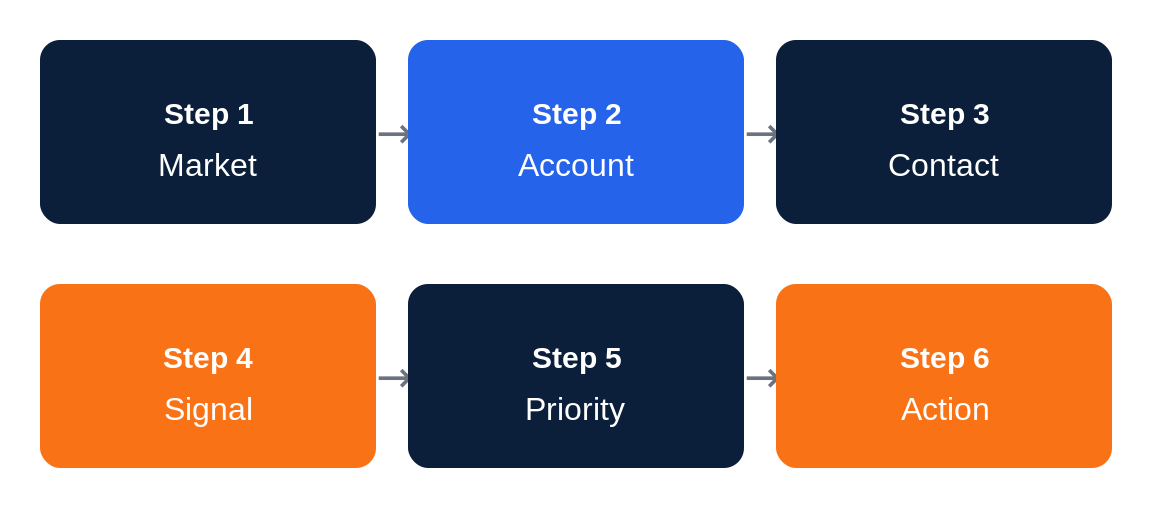
The AI Workforce Prospecting Model, an AI Workforce framework, not an industry standard.
These selections reflect current public product documentation and pricing checked in August 2026. They are category recommendations rather than a single universal ranking; check every capability, price and limitation against each vendor's own documentation before you buy.
Comparison Methodology
AI Workforce reviewed each provider's own product and pricing pages in August 2026. This is a documentation-based comparison, not a controlled hands-on test of every platform, so capabilities are attributed to current public sources rather than presented as independently verified performance. We assessed each tool against: account discovery; decision-maker and stakeholder discovery; AI research depth; enrichment and verification; signal and trigger detection; ICP filtering; LinkedIn or social capability; CRM integrations; workflow flexibility; UK suitability; pricing transparency; data governance; and best-fit team. Prices checked 22 August 2026. Confirm current details directly with each vendor before budgeting.
Compare Tools at a Glance
Tool | Best for | UK relevance | Pricing | Genuine limitation |
|---|---|---|---|---|
LinkedIn-native account and stakeholder discovery | UK pricing published directly in GBP | Core £94.99/mo; Advanced £130/mo; Advanced Plus custom | Data limited to what is visible on LinkedIn; less useful for firmographic or technographic depth | |
Accessible all-in-one contact database and prospecting | Vendor states GDPR compliance; buyer verification still required | Free; approx £36 to £87/user/mo, 3-user minimum | Credit consumption at volume needs active monitoring | |
Multi-source research and enrichment workflows | Vendor states GDPR, SOC 2, ISO 27001/42001 compliance | Free plan; Launch from £122/month; Growth from £326/month, based on annual billing | Requires build effort; usage-based credits need monitoring | |
UK and European contact verification | Strong; European-focused data and compliance messaging | Custom quote only; Standard and Pro, both 5 seats | No published self-serve pricing | |
Job-change and relationship signals | General, not UK-specific | Core approx £2,433/mo; Advanced approx £4,563/mo; Elite approx £9,125/mo | Priced for mid-market and enterprise budgets | |
CRM-native prospecting | General; HubSpot publishes GBP pricing for Sales Hub | Bundled within Sales Hub Professional and Enterprise tiers | Only as good as the data already in HubSpot |
Prices checked 22 August 2026. Figures for vendors that publish in US dollars have been converted to sterling at an illustrative rate of approximately £0.73 per US dollar; see the currency note under "What Do AI Sales Prospecting Tools Cost?" Confirm current rates directly with each vendor before budgeting.
Capability Matrix
Tool | Discovery | Contact data | AI research | Enrichment | Signals | CRM |
|---|---|---|---|---|---|---|
LinkedIn Sales Navigator | Yes, LinkedIn-native | In-platform only; no exported contact data | AI insights (Advanced+) | Limited | Job changes, posts, activity | Salesforce, Dynamics on higher tiers |
Apollo | Yes | Yes, large database | AI Assistant | Yes | Website visits, job changes | Salesforce, HubSpot, Outreach, SalesLoft |
Clay | Via integrations | Via integrations | Claygent, strong | Yes, waterfall across 150+ providers | Job change, news, web intent (Growth+) | API and native CRM from Growth |
Cognism | Yes | Yes, phone-verified | AI company research, persona builder | Limited | Hiring, funding, M&A; intent on Pro | Standalone or add-on to major CRMs |
UserGems | Limited | Via signal tracking | Research Agent, Writing Agent | Limited | Job change and relationship signals | Salesforce, HubSpot, Outreach, Salesloft |
HubSpot Breeze Prospecting Agent | Yes, from CRM data | From existing HubSpot records | Native to Sales Hub | Limited | Engagement and lifecycle signals | Native, part of HubSpot |
Individual Tool Reviews
Each review below is based on current public documentation and pricing, not hands-on testing, unless stated otherwise.
LinkedIn Sales Navigator
Best for: businesses wanting to research accounts and stakeholders directly from LinkedIn's own professional network, without relying on a third-party database.
What it does: provides advanced search filters for companies and people, lead and account recommendations, and alerts on job changes, posts and account activity, all sourced from LinkedIn's own data rather than an external provider.
Prospecting strengths: because LinkedIn members can update their own profiles, Sales Navigator may provide useful role and seniority information, although records should still be checked before outreach; InMail messaging is available directly from within the tool for outreach to people outside a rep's existing network.
Relevant integrations: CRM sync with Salesforce, Microsoft Dynamics and other CRMs is available on higher Sales Navigator tiers.
Official pricing: Core £94.99/month or £959.88/year; Advanced £130/month or £1,499.88/year; Advanced Plus, custom pricing. Checked 22 August 2026 against LinkedIn's official Sales Navigator plan comparison page.
Genuine limitation: research and signals are limited to what LinkedIn itself surfaces; a business also wanting firmographic depth, technographic data or verified phone numbers typically needs to pair Sales Navigator with a separate enrichment tool. It is a search and prospecting product, not a contact-data provider; it does not export email addresses or phone numbers the way Apollo or Cognism do.
Best-fit business: a B2B team that wants strong stakeholder mapping and warm-path discovery through LinkedIn's own network, likely alongside a separate data or enrichment tool for fuller account research. If your team is also weighing LinkedIn-based outreach automation, see our dedicated LinkedIn automation tools guide for the platform-policy risks involved.
Apollo
Best for: teams wanting an accessible, all-in-one contact database with prospecting, scoring and outreach in a single product.
What it does: combines a large B2B company and contact database with an AI Assistant for account research, workflow automation for outreach sequencing, and a Chrome extension for prospecting directly from LinkedIn and other web pages.
Prospecting strengths: Apollo's own materials describe using AI research to accelerate prospecting, with an AI Assistant summarising account information and drafting first-touch personalisation from that research.
Relevant integrations: Salesforce, HubSpot, Outreach, SalesLoft, Marketo and general email providers are listed as native integrations, with API access available on Custom plans.
Official pricing: Free; Basic approximately £36 per user/month, Professional approximately £58 and Organisation approximately £87 (minimum 3 users), all based on annual billing and converted from Apollo's published US prices on 22 August 2026. Monthly billing is available at higher per-user rates. Check Apollo's official pricing page for current rates.
Genuine limitation: export and enrichment credits are allocated per tier and per user, so the effective monthly cost depends on usage volume and needs modelling against your own expected export and enrichment needs rather than assumed from the headline per-user rate.
Best-fit business: a B2B team wanting one product spanning contact data, research and outreach, comfortable managing a credit-based usage model.
Clay
Best for: teams wanting to build custom, multi-source research and enrichment workflows rather than use a single fixed product.
What it does: lets a business combine over 150 data providers into a single enrichment workflow, using "waterfall" logic to fall back to a second or third provider when the first does not return a result, and Claygent, Clay's AI research agent, to generate custom research fields from web sources.
Prospecting strengths: because Clay is a workflow builder rather than a fixed database, a team can configure account and contact research specific to its own ideal customer profile, combining CRM data, signals and enrichment providers in one table.
Relevant integrations: HTTP API integrations and native CRM integrations are available from the Growth tier; data warehouse connections such as Snowflake and BigQuery are also supported from Growth upward.
Official pricing: Clay offers a limited Free plan with 500 actions and 100 data credits per month; Launch from £122/month billed annually, starting at 15,000 actions and 2,500 data credits a month (monthly billing is available at a higher rate); Growth from £326/month billed annually, starting at 40,000 actions and 6,000 data credits a month; Enterprise, custom pricing. Launch and Growth provide higher allowances and additional capabilities than the Free plan. Clay separately offers a 14-day trial of paid functionality, which is distinct from its permanent Free plan. Figures are annual-equivalent monthly pricing converted from Clay's published US dollar rates; monthly-billing rates are higher. Check Clay's official pricing page for current rates. Checked 22 August 2026.
Genuine limitation: Clay is a workflow-building platform rather than an out-of-the-box prospecting product, so it requires more setup time than a fixed tool, and usage-based credits need active monitoring to avoid unexpected top-up costs.
Best-fit business: a team with the technical appetite to configure its own research and enrichment workflows, prioritising data flexibility over a plug-and-play interface.
Cognism
Best for: UK and European teams that need phone-verified mobile numbers and compliance-first data specifically built for European prospecting.
What it does: provides firmographic, technographic and signal-based list building, alongside an AI company research feature and an AI persona builder to help define target contact profiles, with an emphasis on data compliance across European markets.
Prospecting strengths: Cognism's own materials emphasise European data coverage and compliance messaging more directly than the other tools in this comparison, alongside on-demand mobile number verification on its Pro tier.
Relevant integrations: CRM enrichment is available as a standalone product or an add-on; Cognism lists native integrations for common CRM and sales engagement platforms.
Official pricing: Sales Prospecting is sold in Standard and Pro packages, both including 5 seats, with pricing available only via a custom quote from Cognism's sales team; intent data (via Bombora) and on-demand mobile verification are reserved for the Pro tier. No self-serve numeric pricing is published on the official pricing page. Checked 22 August 2026.
Genuine limitation: the absence of published self-serve pricing means a business cannot compare Cognism's exact cost against other tools without first speaking to sales, which is a meaningfully different buying process to the other tools in this table.
Best-fit business: a UK or European team that specifically values phone-verified data and compliance-first positioning, and is comfortable with a sales-led buying process rather than self-serve pricing.
UserGems
Best for: teams prioritising job-change and relationship signals for account-based prospecting, particularly tracking known buyers or champions who move to new companies.
What it does: builds and enriches prospect lists, scores accounts and contacts, and automates campaigns around signal events, with a particular focus on job-change tracking, buying-group discovery and contact-level intent.
Prospecting strengths: UserGems' positioning centres specifically on signal-based account-based marketing, tracking when a known contact, such as a past customer or an engaged buyer, moves into a new role at a new company, which is a narrower and more specific signal than general firmographic fit.
Relevant integrations: native Salesforce and HubSpot integration, sales engagement tool integrations such as Outreach, Salesloft and Gong Engage, and ad-platform sync with LinkedIn, Meta and Google from the Advanced tier.
Official pricing: Core approximately £2,433/month; Advanced approximately £4,563/month; Elite approximately £9,125/month; each tier also carries a one-time implementation fee of approximately £2,190 to £7,300. Converted from prices published in US dollars on UserGems' official pricing page, checked 22 August 2026.
Genuine limitation: pricing is set for mid-market and enterprise budgets, with no published entry tier below roughly £2,400 a month, which puts it out of reach for most small UK businesses evaluating this category.
Best-fit business: a mid-market or enterprise revenue team that wants signal-based, account-based prospecting built around job changes and known relationships, and has the budget for an enterprise-tier platform.
HubSpot Breeze Prospecting Agent
Best for: businesses already running their pipeline in HubSpot that want prospecting research built directly into the CRM rather than bolted on as a separate tool.
What it does: uses HubSpot's own CRM and enrichment data to suggest and prioritise accounts and contacts directly within the CRM a rep already works in, reducing the need to copy data between a separate prospecting tool and the CRM of record.
Prospecting strengths: because it operates on data already inside HubSpot, account ownership, suppression history and prior engagement are inherently visible to the prospecting layer, addressing account-coordination problems by design rather than through a separate integration.
Relevant integrations: native by definition, since it is part of HubSpot's own Sales Hub product rather than a separate integration.
Official pricing: Breeze prospecting features are available through HubSpot Sales Hub Professional and Enterprise tiers rather than every paid tier, and are not sold as a standalone product. Check HubSpot's official pricing page for current GBP pricing.
Genuine limitation: prospecting quality depends heavily on the data already inside HubSpot; a business with a thin or new CRM will get less value from this category than from a tool that brings its own large external database.
Best-fit business: a HubSpot Sales Hub Professional or Enterprise customer wanting prospecting research and prioritisation without introducing a separate prospecting product into its stack.
What AI Prospecting Tools Do
AI sales prospecting tools research companies and contacts, score them against an ideal customer profile, and rank which accounts are worth a rep's time, replacing manual list building with a prioritised shortlist. They typically combine a data source (a database, a CRM, or a set of enrichment providers), a signal layer (job changes, funding events, website activity), and a scoring or ranking step that a rep reviews before outreach begins. For the fuller explanation of how this works, including the Market, Account, Contact, Signal, Priority and Action framework, see our companion guide to AI sales prospecting.
Prospecting Tools vs Lead Generation vs AI SDR
Lead generation creates or captures a broader pool of potential opportunities through databases, enrichment and inbound capture; see our AI lead generation tools comparison for that category. Sales prospecting selects and researches specific companies and people that deserve attention before approach, overlapping with lead generation at the discovery layer. AI SDR platforms may combine prospecting, outreach, follow-up and basic qualification inside one product; see our AI SDR tools guide for that broader category. Outreach and follow-up contact the selected prospect and continue the conversation, covered in our guides to automating sales outreach, AI follow-up automation and cold email software.
The tools compared on this page sit specifically at the research and prioritisation stage. Where a tool bundles in outreach or qualification features, that capability is noted in its review but is outside this page's main comparison scope.
The AI Workforce Prospecting Tool Scorecard
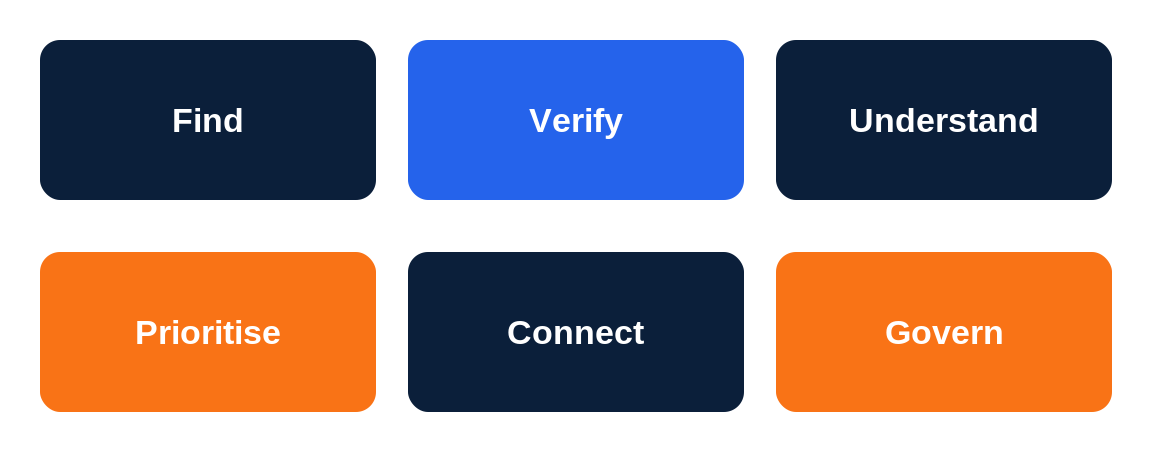
The AI Workforce Prospecting Tool Scorecard, an AI Workforce framework, not an industry standard.
Rather than a single fit score, buyers get more value from checking a tool against six distinct questions:
Scorecard factor | Buyer question |
|---|---|
Find | Does it identify the right companies and people? |
Verify | Can important facts and contact details be checked? |
Understand | Does it provide useful, sourced account context? |
Prioritise | Can it explain why one prospect ranks above another? |
Connect | Does it fit the CRM and wider sales workflow? |
Govern | Can people control data use and important decisions? |
The AI Workforce Prospecting Tool Scorecard is an editorial evaluation framework, not an industry or regulatory standard.
Applying these six questions directly to a vendor demo, rather than accepting a general accuracy or intelligence claim, is one of the more reliable ways to compare two tools that look similar on paper.

A structured tool-selection process, testing shortlisted tools against the same sample before committing.
Buyer Scenarios: Which Tool Fits Which Team
Buyer | Start with | Likely tools |
|---|---|---|
Small UK sales team | Accessible database with transparent usage costs | Apollo or LinkedIn Sales Navigator |
Recruitment firm | Accurate current contact and job-change data | Cognism, LinkedIn Sales Navigator or UserGems |
Enterprise ABM team | Account and relationship signals | UserGems or an intent-led platform |
Revenue operations team | Configurable enrichment and CRM workflow | Clay |
LinkedIn-led seller | LinkedIn-native account research | LinkedIn Sales Navigator |
Multi-channel team | Connected CRM, research and outreach workflow | CRM-led platform or a governed custom workflow |
These are starting points, not fixed recommendations. The right fit still depends on your data coverage, budget and existing integrations.
What Buyers Must Verify Before Using AI-Generated Research
Not every fact an AI prospecting tool surfaces carries the same weight. It helps to sort what a system produces into four categories before it reaches a rep:
Observed fact: directly visible in a named source at the retrieval date, but still subject to freshness and source-accuracy checks, such as a role stated on a company page
Sourced fact: retrieved from a named external source with a date, such as a funding announcement from a named publication
Vendor signal: a provider's proprietary interpretation of activity or intent, such as a "buying stage" score
AI inference: a conclusion generated from available information that still requires verification, such as an assumed job function from a job title alone
Customer-facing personalisation should never treat a vendor signal or an AI inference as though it were a verified fact. A message built on an unchecked inference can misfire in a way that is more damaging than a generic one, because it reads as researched when it was actually guessed.
UK GDPR and Platform Rules for AI Sales Prospecting
Prospecting deals directly with sourcing and enriching personal data, so it carries real UK data protection obligations even before a single outreach message is sent. This section is general information rather than legal advice; see our AI GDPR compliance guide for the fuller framework.
Business contact records are personal data whenever they relate to an identifiable person, which covers most B2B prospecting data. UK GDPR applies to that processing regardless of whether the data was sourced manually or by an AI tool. Legitimate interests may be an appropriate lawful basis for some B2B prospecting activity, but it should not be assumed automatically. Where relied upon, organisations should assess the purpose, necessity and impact on the individual. A contact's details being visible on a company website, Companies House or a professional networking profile does not exempt that processing from UK GDPR if the details identify a person; a lawful basis and privacy information still apply.
Purchased and enriched data need their own scrutiny: confirm a provider's lawful basis for the data it holds, check how current the data actually is, and maintain provenance so a record's source can be traced later. Suppression and retention need equal attention. Where any platform involves scraping or automating a third-party site, such as a professional networking platform, check that activity against the platform's current terms of service directly rather than assuming a vendor's marketing claim reflects what is actually permitted; see our LinkedIn automation tools guide for that platform-policy risk specifically.
What Do AI Sales Prospecting Tools Cost?
Two distinct cost categories apply here: the price of the commercial tools compared above, and the cost of a custom-built prospecting workflow with AI Workforce or a similar provider. If your team is also weighing a fully AI-driven SDR product against a prospecting-only tool, our AI SDR pricing guide breaks down that adjacent cost category.
Off-the-shelf prospecting subscriptions: entry points vary widely by category. Clay offers a permanent Free plan before paid plans start around £122 a month billed annually; Apollo's paid tiers start at approximately £36 per user/month billed annually, with a permanent free plan available for very light use. Cognism and enterprise-tier UserGems require a sales conversation rather than a self-serve checkout, with UserGems' published tiers starting around £2,400 a month. LinkedIn Sales Navigator's Core tier is £94.99 a month, and HubSpot's Breeze Prospecting Agent is bundled within paid Sales Hub Professional and Enterprise tiers rather than sold as a standalone subscription.
Seat licences: Cognism's Standard and Pro tiers both include 5 seats as a base allocation; UserGems includes unlimited admin and end users on every tier. Apollo, Clay and LinkedIn Sales Navigator are typically priced per seat or per user, with the exact rate depending on the tier and billing term.
Data and enrichment credits: Clay separates "actions," which measure platform orchestration, from "data credits," which pay for enrichment pulled from its data marketplace. Cognism uses a similar credits model where one credit reveals one contact record, reused only if that contact later changes role. Apollo bundles a set number of export and enrichment credits into each per-user tier.
Intent or signal add-ons: Cognism's intent data, sourced via Bombora, is available only on its Pro tier. Clay's web intent signals are available from its Growth tier upward. UserGems' contact-level intent and web deanonymisation features are available from its Advanced tier upward. These add-ons typically represent a meaningful step up in cost over base list-building and enrichment.
Custom implementation costs: bespoke implementation costs vary substantially depending on data sources, integrations, workflow complexity and governance requirements. See our AI Automation Pricing guide for a fuller breakdown of what drives that cost.
All prices are shown in pounds for UK readers where possible. Prices published in US dollars were converted at an illustrative rate of approximately £0.73 per US dollar, checked on 22 August 2026. This is a rounded estimate, not a live exchange-rate quotation, and the actual sterling cost will vary with exchange rates, VAT and payment-provider fees. Confirm current pricing directly with each vendor before budgeting.
A Buyer's Due Diligence Checklist
Before committing budget, work through these questions with any vendor:
What is the starting price, and does it require an annual commitment?
How many seats are included, and what does an additional seat cost?
What credit or enrichment charges apply beyond the base subscription?
What would the real monthly cost be at your expected usage, not the headline rate?
Is a free trial or sample-data test available before purchase?
Which CRM integration tier do you actually need, and is it included at your price point?
Can data be exported if you leave the platform?
What are the data retention and deletion terms?
Does the vendor transfer data internationally, and under what safeguard?
Can a human override or correct an automated research decision or score?
What is the vendor's UK/EU data coverage, specifically for your target market?
How is "intent" actually calculated, and is that methodology disclosed?
Is customer data used to train the vendor's own models, and can that be disabled?
What would the real annual cost be once implementation, training and credits are included?
Where AI Workforce Fits
AI Workforce publishes this comparison and also builds AI-supported sales workflows. A standalone prospecting tool may be the better option when a business only needs data, enrichment or research.
AI Workforce becomes relevant when verified prospect research needs to feed into a connected process involving prioritisation, permitted outreach, follow-up, qualification, CRM updates and human handover. No direct integration with a named platform should be assumed unless it has been verified for the proposed implementation.
Not Sure Which Approach Fits Your Business?
Book a Free Assessment →
A Four-Week AI Prospecting Pilot
Rolling out AI sales prospecting against a constrained slice of the market is safer than automating full-scale list generation from day one. If you are unsure whether your team, CRM and data sources are ready for this rollout, our AI readiness assessment can help you gauge that before starting the pilot.
Before the pilot, identify the missing capability, shortlist two or three tools and run the same sample accounts through each. Comparing contact accuracy, research quality, context, credit consumption and integration requirements against the same records, rather than different ones per vendor, is what makes the comparison meaningful before you choose one platform for the controlled rollout.
Week one, ICP and exclusions: define account fit criteria, target contact roles, exclusions and suppression rules before any list is generated
Week two, historical test: run the system against accounts your team has already won, lost and rejected, and compare its ranking to what actually happened
Week three, recommendation mode: let the system generate prospect lists and research, but have reps review and approve which accounts actually enter outreach
Week four, constrained live use: pass only high-confidence accounts automatically into one controlled campaign, while everything else stays in recommendation mode
How Do You Measure AI Sales Prospecting?
Volume of accounts researched is not a sufficient measure on its own, since a system can process a large list while quietly producing poor-fit or duplicate targets. Track a broader set of prospecting-specific indicators: valid-contact rate, the share of contacts that pass basic verification; ICP match rate, how closely the accounts produced actually match the defined ideal customer profile; contact-role accuracy, how often the identified contact is genuinely the right person; sales-accepted prospect rate; meetings booked per validated prospect; duplicate-account rate across reps and workflows; cost per sales-accepted opportunity; and research time saved per rep, measured against a real baseline rather than assumed.
Also track research correction rate, meaningful replies from accepted prospects and attributable pipeline or revenue. These connect research quality to commercial outcomes rather than stopping measurement at meetings booked.
The standout metric worth tracking specifically for this workflow is the prospect acceptance rate, the percentage of AI-selected accounts that a salesperson agrees are genuinely worth pursuing after review. A high, stable prospect acceptance rate over time is a much stronger signal of a healthy rollout than raw research volume.
Is AI Sales Prospecting Worth It?
AI sales prospecting is worth evaluating wherever manual research is a visible bottleneck, or wherever reps are spending meaningful time on accounts that were never a genuine fit. Its value depends on whether fit, timing and engagement are tracked as separate signals rather than blended into one score, and on whether account and contact selection are treated as two distinct decisions rather than one.
AI Workforce Insight: the prospecting systems that hold up over time are the ones that keep a rep in the loop on anything a fabricated or stretched detail could damage: a personalisation line, a contact who may have moved on, an account another rep already owns, rather than optimising purely for how large a list the system can generate.
A good prospecting tool is not the one that produces the most accounts. It is the one where a rep opens the list and genuinely trusts that the accounts on it are worth the first call.
Related Guides
Best AI Sales Automation Tools: Platforms Compared · AI Outbound Sales Automation · AI Sales Pipeline Management · AI Lead Generation Tools · AI Lead Qualification and Scoring · AI SDR Tools for 2026 · AI SDR Pricing UK 2026 · Best AI Sales Assistant Software · AI Follow-Up Automation · Cold Email Software · LinkedIn Automation Tools · AI Appointment Setter · How to Write an AI Agent Brief · AI and GDPR Compliance for UK Businesses · AI Automation Pricing UK · AI Readiness Assessment
Sources and Further Reading
LinkedIn Sales Navigator: plan comparison
Apollo: Pricing
Clay: Pricing
Cognism: Pricing
UserGems: Pricing
HubSpot: sales prospecting automation guidance
Companies House: Find and update company information
GOV.UK: Companies House
ICO: Guide to the UK GDPR
ICO: Direct marketing and privacy and electronic communications guidance
Prices checked: 22 August 2026. Vendor pricing changes; confirm current rates directly with each vendor before budgeting.
Frequently Asked Questions
What are AI prospecting tools? AI prospecting tools are software that automatically research companies and contacts, check them against an ideal customer profile, and rank them by fit, timing and engagement signals, producing a prioritised list a rep can work from instead of building one manually.
What is the best AI tool for sales prospecting? There is no single best tool; it depends on your budget, existing CRM and data needs. LinkedIn Sales Navigator suits LinkedIn-native account research, Apollo suits an accessible all-in-one database, Clay suits custom enrichment workflows, Cognism suits UK and European verified data, UserGems suits job-change signals, and HubSpot's Breeze Prospecting Agent suits HubSpot customers.
What are the best tools for UK businesses? Cognism has particular UK and European contact-data strength. LinkedIn Sales Navigator is useful for UK teams prospecting within LinkedIn, while Apollo and Clay provide broader general-purpose coverage. See the shortlist and capability matrix above for the full breakdown.
AI prospecting tools versus AI SDR? AI prospecting tools research and prioritise accounts and contacts before outreach begins. AI SDR platforms typically extend further, combining prospecting with outreach, follow-up and basic qualification in one product. See our AI SDR tools guide for that broader category.
Can AI prioritise prospects? Yes, by scoring accounts and contacts against fit, timing and engagement signals, but a single automated score should still be reviewed by a person before it drives outreach, particularly where the underlying signals are weak or conflicting.
What are the best AI sales prospecting tools in 2026? There is no single best tool; it depends on your budget, existing CRM and data needs. LinkedIn Sales Navigator suits LinkedIn-native account and stakeholder research. Apollo suits an accessible all-in-one contact database and prospecting workflow. Clay suits teams wanting to build custom, multi-source enrichment workflows. Cognism suits UK and European teams needing verified mobile numbers. UserGems suits enterprise teams prioritising job-change signals. HubSpot's Breeze Prospecting Agent suits businesses already running their pipeline in HubSpot.
Can AI analyse company websites? Yes. AI research agents, such as Clay's Claygent or the AI research features built into several of the tools compared here, can read a company's own website to extract relevant details for account research, though the output should still be checked against the actual source before being used in outreach.
Can AI use Companies House for prospecting? Yes, for confirming a UK company's registered status, incorporation date and officer information, but Companies House does not provide private business email addresses, and officer information does not prove someone holds current buying authority. Commercial contact enrichment is a separate data layer that sits on top of Companies House data, not a replacement for it.
AI prospecting tool versus lead database? A lead database, such as a static contact list, only provides raw contact records. An AI prospecting tool takes that data further: scoring accounts against an ideal customer profile, detecting timing and engagement signals, and prioritising which accounts and contacts are genuinely worth pursuing.
How accurate are AI prospecting tools? Accuracy depends heavily on the freshness and quality of the underlying data, not on the AI layer alone. Contact and firmographic data degrades over time as people change roles and companies change structure, so tracking metrics such as valid-contact rate and contact-role accuracy matters more than trusting a vendor's general accuracy claim.
Are AI prospecting tools GDPR compliant? They can be, but compliance depends on how the data is sourced, processed and governed, not on the product alone. UK GDPR applies to business contact data regardless of whether it was sourced manually or by an AI tool, and a lawful basis, data minimisation and suppression handling all need to be addressed directly, even where the underlying data was publicly available.
How much do AI sales prospecting tools cost? Entry points range from free tiers on some platforms to several hundred pounds a month per seat on others, with data and enrichment credits typically billed separately. Enterprise-tier, signal-based platforms can run into several thousand pounds a month. A defined custom workflow commonly costs £2,000 to £8,000 to build, with £150 to £600 a month in ongoing costs.
How do I know if an AI prospecting tool is actually working? Track ICP match rate, contact-role accuracy and prospect acceptance rate- the percentage of AI-selected accounts a salesperson agrees are worth pursuing after review- rather than volume of accounts researched alone.
Key Takeaways
There is no single best AI sales prospecting tool for 2026; the right choice depends on your data sources, existing CRM, budget and how much of the research step you want automated versus recommend-only
LinkedIn Sales Navigator, Apollo, Clay, Cognism, UserGems and HubSpot's Breeze Prospecting Agent each suit a different priority, from LinkedIn-native discovery to multi-source enrichment, verified UK data, job-change signals and CRM-native prospecting
The AI Workforce Prospecting Tool Scorecard (Find, Verify, Understand, Prioritise, Connect, Govern) gives buyers six concrete questions to put to any vendor, rather than trusting a single fit score
Sort AI-generated research into observed facts, sourced facts, vendor signals and AI inferences; never let customer-facing personalisation treat a vendor signal or inference as a verified fact
Companies House supplies official UK company data but not private contact details or proof of buying authority; commercial enrichment is a separate data layer
UK GDPR applies to prospecting data even when it was sourced from publicly available profiles, and any platform automation should be checked against that platform's current terms
Track prospect acceptance rate alongside ICP match rate and contact-role accuracy, not just volume of accounts researched, to judge whether a rollout can actually be trusted
Start narrow: define ICP and exclusions, test against history, run in recommendation mode, then automate only high-confidence accounts first
This article is general information rather than legal advice. Take independent advice on data protection obligations specific to your own prospecting data and outreach activity, and confirm all provider pricing, features and UK suitability directly with each vendor before purchasing.
We'll help you define your Account and Contact criteria, decide what AI should research automatically versus recommend, and build a piloted rollout that keeps your pipeline trustworthy from week one.
Ready to Modernise Your Prospecting?
Get in Touch →
About the Author
Luca Controlo is a Content Marketing Specialist at AI Workforce. He writes guides that turn AI sales concepts into practical, governed workflows a B2B team can actually implement, with a particular focus on account and contact research.
This guide was reviewed by Rodi Taze, Co-Founder of AI Workforce, for accuracy and alignment with how AI Workforce's own prospecting and CRM automation agents are designed and governed.
Reviewed: August 2026.
© 2026 AI Workforce Ltd. All rights reserved.