Best AI Lead Generation Tools 2026: B2B Software Compared
Posted On: July 9, 2026
Last updated: August 2026 · Written by Luca Controlo, Content Marketing Specialist · Reviewed by Rodi Taze, Co-Founder of AI Workforce
AI lead generation tools use artificial intelligence to identify, research, enrich, score or prioritise potential customers. Some provide company and contact databases, some analyse intent or business signals, and others research prospects against an ideal customer profile. Data quality matters more than database size, because a large export has little value if its contacts are stale, irrelevant or unverifiable.
This guide compares leading AI lead generation tools by the job they perform, including company discovery, contact data, enrichment, intent signals and AI-assisted research. There is no universal winner: the right choice depends on the data you need, the markets you target and how leads will be validated before reaching sales.
Quick Answer: There is no single best AI lead generation tool for every business. Apollo and Lusha suit teams wanting an accessible, self-serve contact database. Clay suits teams building custom, multi-source enrichment workflows. Cognism and ZoomInfo suit larger teams needing verified phone-level or enterprise-grade data. LinkedIn Sales Navigator suits teams prospecting directly on LinkedIn. Leadfeeder (formerly Dealfront) suits European website-visitor identification. 6sense and Bombora suit enterprise account-based marketing built on intent data. Vainu suits Nordic and European company-data targeting. The comparison below checks each candidate against current public documentation and pricing, not hands-on testing, unless stated otherwise.
What's Covered
Above-the-Fold Shortlist Comparison Methodology Compare Tools at a Glance Capability Matrix Individual Product Reviews What Are AI Lead Generation Tools? The Seven-Function Framework The AI Workforce Lead Quality Model Company Data Versus Contact Data Companies House and AI for UK Lead Research Lead Generation vs Sales Prospecting vs AI SDR vs CRM Raw Lead Lists Versus Lead Intelligence Public Opportunity Signals Data Quality, Enrichment and Intent Signals Common Failure Modes More Leads Versus Better Leads How to Choose the Right Tool A Small-Business Implementation Sequence UK GDPR, PECR and Platform-Term Risk A Data-Provider Due Diligence Checklist Where AI Workforce Fits What AI Lead Generation Tools Cost A Controlled Four-Week Pilot Metrics That Matter Handing Off to Qualification and Outreach Sources and Further Reading Frequently Asked Questions Key Takeaways
Above-the-Fold Shortlist
Best accessible, self-serve contact database: Apollo, for combined B2B contact data, enrichment and workflow tools in one product.
Best for custom, multi-source enrichment: Clay, for flexible, credit-based enrichment workflows that pull from many data providers at once.
Best UK and European contact-data specialist: Cognism, for phone-verified contacts with particular strength across the UK, DACH, France, Benelux and the Nordics.
Best for prospecting directly on LinkedIn: LinkedIn Sales Navigator, for advanced search filters, InMail and CRM sync inside the platform most B2B buyers already use.
Best European website-visitor identification: Leadfeeder (formerly Dealfront), for revealing which companies are visiting your site and pushing them to a CRM.
Best enterprise account-based intent platform: 6sense, for predictive account scoring and buying-stage intelligence at scale.
Best dedicated third-party intent data: Bombora, for topic-level Company Surge signals that other platforms can layer contact data onto.
Best Nordic and European company-data targeting: Vainu, for firmographic filtering and enrichment focused on Nordic and wider European markets.
Best accessible contact-reveal workflow: Lusha, for a lightweight, credit-based way to reveal verified emails and phone numbers.
Best enterprise sales intelligence platform: ZoomInfo, for a broad combined company and contact database at enterprise scale.
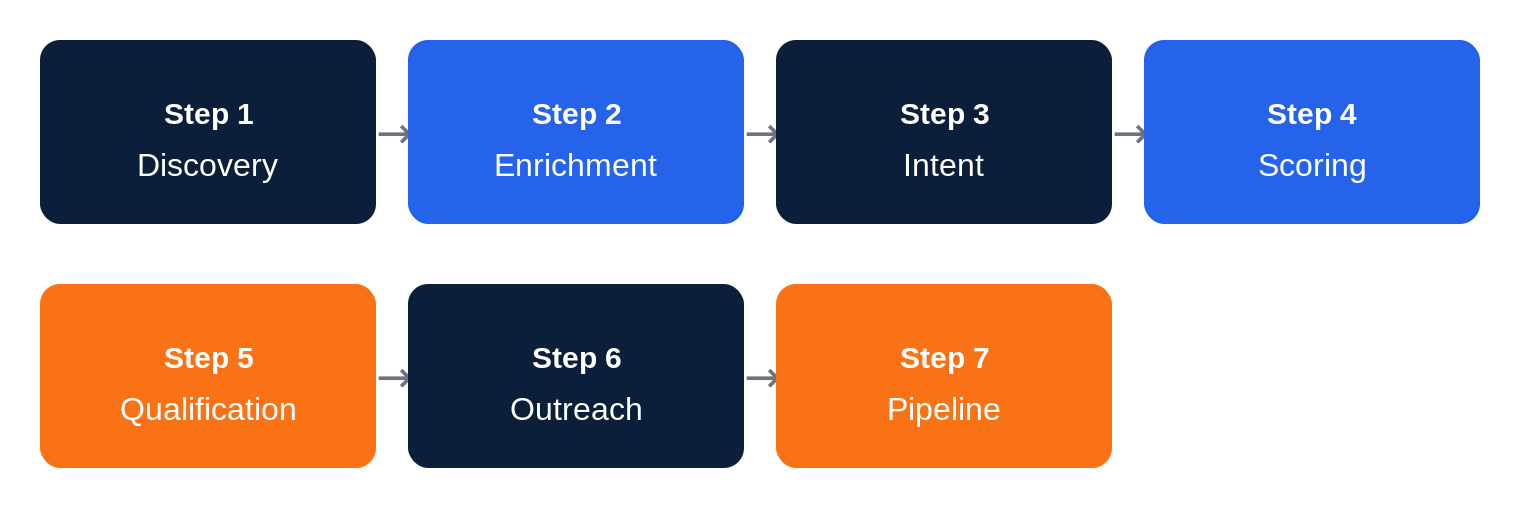
The AI Workforce Seven-Function Lead Generation Framework, an AI Workforce framework, not an industry standard.
These selections reflect current public product documentation and pricing checked in August 2026. They are category recommendations rather than a single universal ranking, and every capability, price and limitation should still be checked against each vendor's own current documentation before you buy, since plans and features change frequently.
There is no single "best overall" tool in this comparison. Company data, contact data, enrichment, intent signals and AI-assisted research are different jobs, and most businesses end up combining two or three of these categories rather than buying one platform that claims to do everything.
Comparison Methodology
AI Workforce reviewed each vendor's own product and pricing pages, along with structured third-party procurement data where a vendor does not publish pricing, in August 2026. We assessed each tool by its primary data type, geographic strength, enrichment depth, intent-signal coverage, integration options, pricing transparency and UK relevance. This is a documentation-based comparison, not a controlled hands-on test of every platform, so capabilities are attributed to current public sources rather than presented as independently verified performance. Where a vendor publishes exact pricing, that is marked "official." Where pricing is not published, and third-party procurement data was used instead, that is marked "not published; indicative range." Confirm current details directly with each vendor before budgeting.
Compare Tools at a Glance
Tool | Best for | Main capability | UK fit | Pricing | Main limitation |
|---|---|---|---|---|---|
Self-serve database plus outreach | Contact data, enrichment | General | Free to approx £87/user/mo | Credit system can obscure true cost | |
Custom multi-source enrichment | Waterfall enrichment | General | Free to approx £363/mo* | Steep learning curve; a build tool | |
UK/EU phone-verified contacts | Verified contact data | Strong UK/DACH/France/Benelux/Nordics | Indicative £11,000+/yr | No published pricing; annual contract | |
Prospecting inside LinkedIn | Search, InMail, CRM sync | General | £94.99 to £130/mo | Data limited to LinkedIn visibility | |
European website-visitor ID | Visitor identification | Strong European focus | Free to approx £521/mo | Value depends on your own site traffic | |
Enterprise account-based intent | Predictive scoring | General | Indicative £26,000+/yr | High cost; built for enterprise ABM | |
Dedicated third-party intent data | Company Surge topics | General | Indicative £18,000+/yr | Intent only; needs a separate contact tool | |
Nordic/EU company-data targeting | Firmographic filtering | Strong Nordic/EU focus | From approx £3,045/yr | Annual billing only, plus onboarding fee | |
Accessible contact-reveal workflow | Credit-based reveal | General | Free to approx £128/user/mo | Credit-based; heavy use gets pricey | |
Enterprise sales intelligence | Combined database | General | Indicative £11,000+/yr | No public pricing; annual contracts only |
*Clay's own pricing page and plan documentation show different monthly figures depending on billing cadence and configuration. This comparison uses Clay's published monthly-billing starting prices (Launch from $185/month, Growth from $495/month), converted to sterling; Clay's own site may display a different annual-equivalent figure depending on the billing toggle selected. Confirm the current billing basis and included data-credit allowance directly with Clay before budgeting.
Prices checked 20 August 2026. Vendors that publish in US dollars or euros are shown with an indicative sterling conversion at illustrative rates of $1 ≈ £0.73 (£1 = $1.3632) and €1 ≈ £0.87 (£1 = €1.1494), checked 20 August 2026. These are rounded estimates, not live exchange-rate quotations. Rows marked "indicative" use third-party procurement data rather than a vendor's own page, because Cognism, 6sense, Bombora and ZoomInfo do not publish exact figures. Confirm current rates directly with each vendor before budgeting.
Capability Matrix
Tool | Company discovery | Contact data | Enrichment | Intent | AI research | Scoring |
|---|---|---|---|---|---|---|
Apollo | Yes | Yes, large database | Yes | Basic | AI Assistant | Basic |
Clay | Via integrations | Via integrations | Yes, waterfall | Via integrations | Strong; core to product | Via workflow |
Cognism | Yes | Yes, phone-verified | Limited | Limited | Limited | Limited |
LinkedIn Sales Navigator | Yes | In-platform only; no exported contact data | Limited | Limited (Account/Lead IQ) | AI insights (Advanced+) | Limited |
Leadfeeder | Yes | Yes, paid tiers | Yes, credits | Yes, visitor/web intent | Daily AI shortlist | Basic |
6sense | Yes | Limited, credit-based | Limited | Yes, predictive AI | Predictive scoring | Yes, predictive |
Bombora | No | No | No | Yes, Company Surge topics | Limited | No |
Vainu | Yes | Limited | Yes | Limited | Limited | Limited |
Lusha | Limited | Yes, credit-based reveal | Limited | Limited | Limited | No |
ZoomInfo | Yes | Yes, large database | Yes | Yes, add-on | Copilot AI | Yes, add-on |
Individual Product Reviews
Each review below is based on current public documentation and pricing, not hands-on testing, unless stated otherwise.
Apollo
Best for: a self-serve B2B contact database combined with enrichment and outreach tooling in one product.
What it does: B2B contact and company data, enrichment, multichannel sequencing, an AI Assistant for research and message drafting, and a dialer.
Data sources: Apollo's own pricing and product pages confirm a credit-based system covering a large self-reported contact database, with paid plans unlocking higher credit allowances and CRM integrations.
Relevant integrations: Salesforce, HubSpot, Outreach, Salesloft, Marketo, SendGrid, and all major email providers, with API access on Custom plans.
Strengths: One of the more accessible platforms combining verified contact data with enrichment and outreach, reducing the number of separate tools a smaller team needs.
Limitation: The credit system can obscure the real monthly cost once enrichment and export credits are added on top of the seat price.
Pricing: Official, confirmed on Apollo's own pricing page: Free; Basic $49 per user per month (approximately £36); Professional $79 per user per month (approximately £58); Organisation $119 per user per month (approximately £87), with a three-seat minimum. Checked 20 August 2026 against Apollo's official pricing page.
Best-fit buyer: A smaller or mid-market team wanting combined data, enrichment and outreach without stitching together several separate tools.
Clay
Best for: revenue operations teams building custom, multi-source enrichment workflows.
What it does: waterfall enrichment across dozens of data providers in one workflow, AI-assisted research, and custom GTM plays combining sourcing, enrichment and prospect-facing action.
Data sources: Clay's own pricing page confirms a free plan plus paid Launch and Growth tiers with expandable Data Credit allowances, and custom Enterprise pricing for larger teams.
Relevant integrations: Supports CRM integrations on qualifying plans, with additional workflows available through APIs and automation connectors such as Zapier; commonly used alongside a contact database such as Apollo as the data source.
Strengths: Highly flexible for combining many data sources into a single enrichment workflow, rather than relying on one provider's data quality.
Limitation: A genuine build tool with a steep learning curve, not a plug-and-play contact database.
Pricing: Clay's published monthly-billing prices start at Launch $185/month (approximately £136) and Growth $495/month (approximately £363). Clay's pricing interface can show different totals depending on billing cadence (monthly versus annual) and the data-credit allowance selected, so treat these as monthly-billing starting prices rather than a fixed figure. Custom Enterprise pricing is available for larger teams. Checked 20 August 2026 against Clay's official pricing page and plan documentation.
Best-fit buyer: A revenue operations team with the technical capacity to design and maintain custom enrichment workflows.
Cognism
Best for: UK and European teams needing phone-verified B2B contact data.
What it does: company and contact data with an emphasis on phone-verified numbers, aimed at outbound calling and multichannel prospecting.
Data sources: Cognism does not publish a self-serve database size on its pricing page; third-party procurement sources describe a database with particular depth across UK, DACH, France, Benelux and the Nordics.
Relevant integrations: Major CRMs and sales engagement platforms, typically confirmed during a sales conversation rather than published generally.
Strengths: Positioned by the vendor around UK and European coverage and phone-number verification, differentiating it from larger, US-centric databases.
Limitation: No public pricing and no self-serve monthly option; a sales conversation is required before you know if it fits your budget.
Pricing: Not published on Cognism's own site; third-party procurement data from Vendr indicates a typical range of approximately £11,000 to £29,000 or more per year, combining a platform fee and per-user licensing, with annual contracts required. Confirm current figures directly with Cognism.
Best-fit buyer: A UK or European team prioritising phone-verified contact accuracy over the largest possible database size.
LinkedIn Sales Navigator
Best for: teams prospecting directly on LinkedIn using the platform's own search and insight tools.
What it does: advanced search filters, InMail messaging, Account IQ and Lead IQ AI-generated insights (Advanced and above), and CRM sync.
Data sources: LinkedIn's own member and company data, accessed through the platform rather than an external database. Sales Navigator is a search and prospecting product, not a contact-data provider; it does not export email addresses or phone numbers in the way Apollo, Cognism or Lusha do.
Relevant integrations: Salesforce, HubSpot, Microsoft Dynamics, Oracle and other CRMs on the Advanced Plus plan.
Strengths: Direct access to LinkedIn's own professional network data and messaging, without relying on a third-party's separately sourced dataset.
Limitation: Data is limited to what is visible or shared on LinkedIn profiles and company pages, and unapproved automation or scraping breaches LinkedIn's own terms.
Pricing: Official, published directly in pounds on LinkedIn's UK pricing page: Core £94.99 per month or £959.88 per year; Advanced £130.00 per month or £1,499.88 per year; Advanced Plus priced individually. Checked 20 August 2026 against LinkedIn's official pricing page.
Best-fit buyer: An individual seller or team whose prospecting process is already centred on LinkedIn.
Leadfeeder (formerly Dealfront)
Best for: European teams wanting to identify which companies are visiting their website and turn that into a prioritised list.
What it does: website-visitor identification, buying-intent signals, contact-detail reveal on paid tiers, workflow automation and a daily AI-curated shortlist of accounts worth acting on.
Data sources: Leadfeeder's own pricing page confirms a free Lite tier and paid Discover, Activate and Scale tiers, each unlocking more identified companies, credits and automation.
Relevant integrations: Salesforce, HubSpot, Pipedrive, Zoho and Google Ads, plus API and MCP server access on higher tiers.
Strengths: Ties inbound website behaviour directly to outbound prioritisation, a different signal type from a purchased or licensed contact database.
Limitation: Value depends heavily on your own website's traffic volume; a low-traffic site will identify fewer companies regardless of plan tier.
Pricing: Official, converted from Leadfeeder's published euro pricing: Free (Lite); Discover from approximately £69/month and Activate from approximately £321/month, both shown as annual-rate starting prices with a monthly billing option also available; Scale from approximately £521/month, billed annually only; custom Enterprise. Checked 20 August 2026. Note: this product was known as Dealfront before rebranding to Leadfeeder in 2026.
Best-fit buyer: A European B2B business with meaningful website traffic wanting to convert anonymous visits into a working prospect list.
6sense
Best for: enterprise teams running account-based marketing at scale.
What it does: predictive account scoring, buying-stage intelligence, and intent-signal aggregation across a business's total addressable market.
Data sources: Paid tiers replaced legacy Team, Growth, and Enterprise plans with a single Sales Intelligence licence combining credits and predictive AI. 6sense discontinued its free Sales Intelligence plan on 12 August 2026, so current access requires a paid licence or a sales conversation.
Relevant integrations: Major CRMs and marketing automation platforms, confirmed during a sales conversation.
Strengths: Designed specifically for coordinating marketing and sales around account-level buying signals, rather than individual contact records.
Limitation: Built for enterprise account-based programmes; the cost and contract structure make it a poor fit for a small or early-stage sales team.
Pricing: Not published; third-party procurement data from Vendr indicates a typical range of approximately £26,000 to £220,000 or more per year depending on package, credit volume and contract length, with 12 to 24 month contracts required. Confirm current figures directly with 6sense.
Best-fit buyer: An enterprise revenue team running coordinated marketing and sales account-based programmes.
Bombora
Best for: businesses wanting dedicated, third-party intent data to layer onto their own contact database.
What it does: Company Surge topic-level intent signals, showing which companies are actively researching topics relevant to your product across the wider web.
Data sources: Bombora's own site does not publish a self-serve database; third-party procurement sources describe pricing built around a defined number of Company Surge topics, API calls and platform integrations.
Relevant integrations: Major CRMs, marketing automation platforms and other sales intelligence tools that consume Bombora's intent feed.
Strengths: A specialist third-party intent-data provider that other platforms integrate as a data layer rather than competing directly with.
Limitation: Intent signals only; Bombora does not provide contact data, so it needs to be paired with a separate enrichment or contact-data tool to be actionable.
Pricing: Not published; third-party procurement data from Vendr indicates a typical range of approximately £18,000 to £110,000 or more per year depending on topic volume and activation, with annual contracts required. Confirm current figures directly with Bombora.
Best-fit buyer: A marketing or revenue operations team that already has a contact-data source and wants an independent intent-signal layer on top.
Vainu
Best for: teams targeting Nordic and wider European markets with company-data filtering and enrichment.
What it does: company-data search and filtering, enrichment, and account targeting focused on Nordic and European company registries and public data sources.
Data sources: Third-party procurement listings describe Prospecting, CRM and Global plan tiers, each drawing on Vainu's company-data coverage; annual billing only, with an onboarding fee on top of the subscription.
Relevant integrations: Major CRMs, confirmed during a sales conversation.
Strengths: Depth of coverage across Nordic markets in particular, where some larger US-centric databases are thinner.
Limitation: Annual billing only, with no monthly option, plus a separate onboarding fee.
Pricing: Third-party procurement data from Vendr indicates: Prospecting from approximately €3,500/year (approximately £3,045); CRM from approximately €4,200/year (approximately £3,654); Global from approximately €12,000/year (approximately £10,440); custom Data plan. Confirm current figures directly with Vainu.
Best-fit buyer: A business prioritising Nordic or wider European company-data coverage over a US-centric database.
Lusha
Best for: teams wanting a lightweight, accessible way to reveal verified contact details.
What it does: contact and company data reveal through a browser extension and web app, using a credit-based model.
Data sources: Lusha's own pricing page confirms a Free plan with a limited monthly credit allowance, and paid Starter, Pro and Premium tiers with larger annual credit allocations.
Relevant integrations: Major CRMs and a browser extension for in-context lookups while browsing LinkedIn or a company website.
Strengths: A low-friction way for an individual rep or small team to reveal verified emails and phone numbers without a large upfront commitment.
Limitation: The credit-based model means heavy usage can become expensive quickly compared with a flat per-seat price.
Pricing: Official: Free plan; Starter from approximately £27 per user per month; Pro approximately £38 to £128 per user per month depending on credit volume; Premium approximately £219 to £482 per month depending on credit volume; custom Scale and Enterprise tiers. Checked 20 August 2026.
Best-fit buyer: An individual rep or small team wanting an accessible, low-commitment way to reveal contact details as needed.
ZoomInfo
Best for: enterprise sales teams wanting a broad combined company and contact database in one platform.
What it does: company and contact data, intent signals as an add-on, org charts, technographic data and Copilot AI features layered across the platform.
Data sources: ZoomInfo does not publish pricing or database size on its own site; access requires a sales conversation and a custom quote.
Relevant integrations: Major CRMs and sales engagement platforms, confirmed during a sales conversation.
Strengths: A broad combined company, contact, intent and technographic dataset in a single enterprise platform.
Limitation: No public pricing anywhere on the site, and no monthly billing option, so budgeting requires a sales conversation before you know if it fits.
Pricing: Not published; third-party procurement data from Vendr indicates typical platform fees of approximately £11,000 to £29,000 or more per year across Professional, Advanced and Elite tiers, plus a mandatory per-user add-on of roughly £1,100 to £1,800. Annual contracts only. Confirm current figures directly with ZoomInfo.
Best-fit buyer: An enterprise sales organisation wanting the broadest possible combined dataset under one vendor relationship.
AI SDR platforms, outreach and qualification
These categories are deliberately not repeated here in full, since AI Workforce maintains dedicated, regularly updated guides covering named platforms, current pricing and feature depth for each: our guides to AI sales prospecting, AI lead qualification, AI SDR pricing UK, Best AI SDR Tools, Cold Email Software, Best AI Sales Automation Tools and Best AI Outbound Sales Agent cover those categories in full depth
What Are AI Lead Generation Tools?
At the simplest level, these are systems built to find, research and rank potential buyers with less manual work from a rep. A basic version might pull contact details from a licensed database. A more advanced tool can also monitor company news for possible signals of relevance, apply a predictive score and suggest who to contact first.
Most plug into a CRM, so records do not need to be copied by hand. The line between a narrow prospecting tool and a full sales platform has blurred, since many products now bundle discovery, enrichment, scoring and outreach into one system rather than selling them separately, an overlap covered in our wider roundup of AI sales assistant software. That bundling is convenient, but it is also why "AI lead generation" gets used as a catch-all term for several genuinely different functions, each with its own risk profile.
The AI Workforce Seven-Function Lead Generation Framework
Treating every AI lead generation feature as equivalent is one of the more common mistakes buyers make. It is worth separating what is actually happening at each stage:
Lead discovery: finding accounts and contacts that match defined criteria
Data enrichment: adding firmographic details, contact information and technology stack to a thin record
Intent and signal monitoring: flagging activity that may suggest relevance or possible buying interest
Lead scoring: prioritising records, often by comparing them against patterns in historical customers
Lead qualification: testing a record against agreed fit criteria before a rep spends time on it
Outreach automation: sending messages and follow-up sequences, covered in more depth in our guide to automating sales outreach with an AI agent
Pipeline management: routing records, updating the CRM and reporting on outcomes
Each of these carries a different level of risk and needs a different level of human review. Discovery and enrichment are largely about data accuracy. Scoring and qualification are about whether the criteria are still valid. Outreach automation is where UK marketing law and deliverability risk enter the picture directly. The comparison in this guide evaluates these products primarily on discovery, enrichment, research, intent and scoring. Some also bundle outreach or pipeline features, but those capabilities are outside this page's main evaluation scope and should be assessed separately.
The AI Workforce Lead Quality Model
Most vendors talk about database size. Very few talk about what actually makes a lead usable. AI Workforce assesses every lead source against eight factors:
Fit: how closely the record matches your defined ideal customer profile, not just industry and headcount
Freshness: how recently the underlying data was collected or verified
Verifiability: whether the source of each field is disclosed, so a claim can be checked rather than trusted blindly
Intent: whether there is a genuine signal of relevance or interest, and how strong that signal actually is
Reachability: whether the contact detail is valid, current and appropriate for the intended channel
Context: whether enough surrounding information exists to personalise an approach without guessing
Priority: where the record sits relative to other leads once fit, freshness and intent are weighed together
Governance: whether the record's origin, applicable lawful basis, transparency status, retention position and suppression status are traceable
The AI Workforce Lead Quality Model is an editorial evaluation framework, not an industry or regulatory standard.
Running a sample of leads against these eight factors, rather than accepting a vendor's own accuracy claim, is one of the more reliable ways to compare two sources that look similar on paper.
Company Data Versus Contact Data
These two data types are often bundled together in marketing copy, but they answer different questions and carry different risk profiles.
Company data describes an organisation itself: its registered name, number, sector, size, location, ownership structure and filing history. Contact data identifies a named individual within that organisation, typically including a job title, email address and sometimes a phone number. A tool can be strong on one and weak on the other. Leadfeeder and Vainu, for example, are primarily company-data and intent-signal tools; contact-level detail is thinner or a paid add-on. Cognism and Lusha lead with verified contact data. Apollo, Clay and ZoomInfo combine both, though depth varies by tier.
This distinction matters for compliance as much as for accuracy. Company data about a registered organisation is not personal data in the same way a named individual's details are, though the two are often stored together in the same record. Knowing which type of data a given field represents is the first step in applying the right UK GDPR and PECR treatment to it, covered in more detail below.
Use the AI Agent Brief framework to document your required data sources, permissions, qualification criteria, integrations and stop conditions before speaking to vendors.
Compare AI Lead Generation Vendors Consistently
Read the AI Agent Brief Framework →
Companies House and AI for UK Lead Research
For UK-focused lead generation specifically, Companies House is worth understanding as a distinct data layer, separate from any commercial contact-data vendor.
A practical UK research workflow typically looks like this: official company data → company selection → website discovery → commercial enrichment → contact discovery → validation → prioritisation → hand-off.
Companies House supplies official, free, publicly available company information, including registered name, company number, status, registered address, SIC code, incorporation date, filing history and officer (director) details, accessible through its own public API. It is a genuinely authoritative source for confirming that a company is real, active and correctly named.
It is important to be precise about what Companies House is not. It is not a private email or sales-contact database, and it does not publish personal contact details such as work email addresses or direct phone numbers for outreach purposes. Any contact-level data used for prospecting has to come from a separate commercial enrichment source, such as the vendors compared above, each with its own provenance, accuracy and reliability that should be assessed independently of the official company record.
It is also worth being explicit that public availability does not automatically grant marketing permission. A director's name appearing in a Companies House filing does not, by itself, create a lawful basis to email that person. UK GDPR and PECR still apply once that name is matched to a personal contact record and used for direct marketing, regardless of how the underlying company data was sourced. Treat Companies House as a way to verify that a company and its officers genuinely exist and are correctly identified, not as a shortcut around the compliance obligations covered later in this guide.
Lead Generation vs Sales Prospecting vs AI SDR vs CRM
These four terms get used loosely, and vendors often blur the line deliberately. It is worth being precise, since the tools in this guide sit specifically in the first category.
Lead generation creates or identifies a pool of potential leads. Sales prospecting researches and prioritises specific accounts or people from that pool. If prospecting is the stage you need to improve, our Best AI Sales Prospecting Tools comparison covers platforms for account discovery, decision-maker research, enrichment, signal detection and UK suitability. Qualification then checks whether a prospect meets agreed fit or readiness criteria, while outreach begins the contact process. AI SDR platforms typically combine research, qualification and outreach into one system, extending well beyond generation. A CRM sits underneath all of it as the system of record, storing and managing the relationship once contact has been made.
Category | Primary job | Typical endpoint |
|---|---|---|
Lead generation | Find, identify and enrich potential leads | Prepared lead record |
Sales prospecting | Research and prioritise specific prospects | Prioritised target |
AI SDR | Engage, follow up and qualify | Meeting or human handover |
CRM | Store and manage relationships and pipeline | Current system of record |
For the platforms covered in this guide, the endpoint is almost always a prepared lead record, not a booked meeting. Where a vendor markets itself as covering the full journey from discovery through to outreach, it is worth checking which of these four jobs it genuinely performs well, and which it has simply bundled in. See our dedicated guides to AI sales prospecting, Best AI SDR Tools and Best AI CRM Software for those categories specifically.
Raw Lead Lists Versus Lead Intelligence
A "ready" list from an AI lead generation tool is rarely as ready as the label implies. A raw lead list is simply an export: names, companies and contact details pulled from a database or enrichment workflow, with no independent verification of accuracy or fit. Lead intelligence is that same data set after it has been checked against your ideal customer profile, cross-referenced for accuracy, and given a defined reason for inclusion.
In practice, exported records can include outdated job titles, incorrect contact details, duplicated people, the wrong person at a similarly named company, inferred email addresses that have never been validated, and companies that fall outside the intended criteria despite scoring well.
A newer risk worth watching for specifically is hallucinated enrichment. Where a tool uses a language model to fill gaps in a thin record rather than retrieving verified data, it can generate a plausible-sounding but incorrect job title, company description or summary. A confident, well-written record is not the same as an accurate one, and this is a growing risk as more enrichment tools lean on generative AI rather than licensed data lookups.
Public Opportunity Signals
Alongside licensed intent data, some genuinely useful signals sit in plain sight on a company's own website. These are not proof of a problem or a stated intention to buy; they are simply publicly visible indicators that may make a company more or less relevant to prioritise.
Examples worth checking during research include:
Online booking availability, which may indicate current operational capacity or a recent system change
Published contact options, which show how a business currently prefers to be reached
Live chat, which may indicate investment in a particular customer-engagement stack
Relevant vacancies, which can suggest growth, a skills gap or a new initiative
New locations, which may indicate expansion into a market you serve
Published service changes, which can suggest a shift in strategy or positioning
Visible workflow characteristics, such as manual booking forms or visibly dated systems, which may warrant further research into the company's current workflow
Treat every item on this list as a possible opportunity signal to weigh alongside other evidence, not as confirmation of intent or a genuine problem. A vacancy or a new location can just as easily reflect routine business activity unrelated to your product.
Data Quality, Enrichment and Intent Signals
Behind the interface, a system typically pulls data from public sources, licensed data partners, your CRM and past deal history, then applies a model trained to spot patterns across that data. Straightforward automation handles the repetitive parts, such as checking a company's size or sector, so a person does not have to do it manually for every record.
Scoring engines often compare a new contact with patterns found in historical customers and closed opportunities. That can genuinely improve prioritisation, but only where the underlying CRM data is representative, accurate and still relevant to the current go-to-market strategy. Historical pipeline data can just as easily reflect previous targeting bias, missing or inconsistent records, one unusually successful segment, territories a team happened to cover, or legacy pricing and positioning that no longer applies.
A lead score can be wrong for several distinct reasons:
The source data was already stale by the time it reached the model
The account resembles past customers only on the surface, not on the factors that actually drove those deals
Activity reflects research or curiosity rather than genuine purchase intent
Multiple people share similar names or job titles, and the wrong one was matched
The company has changed strategy or buying priorities since the historical data was collected
The model is optimising for a proxy, such as reply rate, rather than for revenue or fit
Salesforce's State of Sales 2026 report found that 34% of sales teams already using AI agents use them specifically for prospecting. The same research found that 74% of sales professionals report they are actively working on data cleansing to get more value from AI, and 51% of sales leaders using AI say disconnected systems are slowing their AI initiatives down. Treat this as evidence that the category has genuine perceived value and a live, unresolved data-quality problem in parallel, not as proof that any specific platform improves conversion for your business.
Intent data deserves particular care. A tool that claims to "identify intent" is really identifying signals that may suggest relevance or possible buying activity, not demonstrated buying intent. Worth distinguishing:
First-party behavioural signals, such as a visit to your own pricing page
Third-party topic or research signals, such as engagement with related content elsewhere, the category Bombora specialises in
Company-change signals, such as a funding round, a relevant job advert or a senior hire
Engagement history already recorded in your own CRM
Inferred fit based on similarity to existing customers, rather than any observed activity at all
A website visit, a job advert or a funding announcement may indicate relevance. None of them proves that a company is actively looking to buy right now. Treat every signal as a clue that narrows where to look next, not as proof that justifies skipping validation.
Common Failure Modes
Consolidating the ways a lead generation workflow can go wrong makes it easier to build the right checks in from the start.
Failure mode | Why it matters | Mitigation |
|---|---|---|
Stale contact data | Reaches former employees | Verify before use |
Duplicate records | Creates repeated outreach | Deduplicate before CRM write |
False intent signals | Overstates readiness | Require corroborating evidence |
Hallucinated research | Produces false personalisation | Verify every generated claim |
Black-box scoring | Sales cannot challenge priority | Require explainable factors |
Missing suppression | Reintroduces objecting contacts | Screen before every activation |
More Leads Versus Better Leads
A larger export is not automatically more useful. A tool optimised for volume can produce thousands of records a week, most of which a rep will never touch. A tool optimised for fit produces fewer records, each with a clearer, checkable reason for inclusion.
The practical test is what happens after the export lands in a CRM: how many records does a rep actually work, how many produce a genuine reply, and how many progress to a qualified opportunity. If those numbers stay flat while list size grows, the tool is adding noise rather than value. Measuring cost per usable lead and cost per accepted opportunity, covered in the pricing and metrics sections below, is a more honest way to compare "more" against "better" than list size alone.
How to Choose the Right Tool
Start from the specific data gap you have, not the product category:
If your CRM data is thin on company detail generally, a company-data or enrichment tool such as Apollo, Clay or Vainu is the starting point.
If you need verified phone numbers for UK or European outbound calling, Cognism is built specifically for that.
If you are already prospecting inside LinkedIn and want better search and insight tools there, LinkedIn Sales Navigator extends that workflow directly. Our dedicated guide to LinkedIn automation tools covers the wider category, including platform-policy risk.
If you want to know which companies are already visiting your website, Leadfeeder identifies that traffic and turns it into a target list.
If you are running coordinated account-based marketing at enterprise scale, 6sense and Bombora provide the predictive scoring and intent-signal depth that smaller platforms do not.
If you need a low-commitment way to reveal individual contact details as needed, Lusha is built for that specific job.
If you need the broadest available combined dataset and have the budget for an enterprise contract, ZoomInfo covers company, contact, intent and technographic data in one platform.
For a local-services or specialist business, the calculation can be different again. These businesses often need a smaller number of well-qualified prospects rather than the largest possible database. For example, our guide to AI tools for mortgage brokers shows how lead capture and qualification fit into a regulated mortgage workflow where advice and suitability remain broker-led. For trades and other local B2B businesses, a lightweight tool such as Lusha or Apollo's free tier, combined with manual verification against Companies House, may be more proportionate than an enterprise contract with 6sense or ZoomInfo.
A Small-Business Implementation Sequence
For a smaller team without a dedicated revenue operations function, a simple, ordered sequence keeps a first attempt at AI lead generation manageable:
Define a narrow ideal customer profile, rather than a broad one that produces low-relevance volume
Choose one reliable lead source and learn it properly before adding a second
Enrich only the fields you actually need for outreach and qualification
Score using understandable, explainable signals rather than an opaque vendor formula
Manually review early batches before any automated hand-off to sales
Send approved leads into one defined sales workflow, not several competing ones
Measure accepted opportunities rather than list size, and adjust the source or criteria from there
UK GDPR, PECR and Platform-Term Risk
AI lead generation does not sit outside UK data protection and marketing rules simply because the contacts are business prospects rather than consumers. This section reflects ICO guidance available in August 2026. Direct-marketing guidance may change as the Data (Use and Access) Act is implemented, so businesses should check the latest ICO position before launching a campaign. This section is general information rather than legal advice, but it sets out the main obligations that apply once a tool is processing named business contacts.
UK GDPR applies wherever a platform processes information relating to an identifiable person, and that includes named employees, directors and sole traders held in a lead generation or enrichment database. If a record identifies no individual, for example a generic address such as info@company.co.uk, it generally involves less personal data processing than a record naming a specific person, though the content and surrounding data still matter. Our guide to AI and GDPR compliance for UK businesses covers the underlying framework, including lawful basis, data minimisation and vendor due diligence, in more depth.
Under ICO business-to-business marketing guidance, unsolicited marketing emails and texts generally require consent when sent to individual subscribers, including sole traders and certain partnerships, unless the soft opt-in applies. The consent rule for electronic mail does not apply in the same way to corporate subscribers, such as companies, Scottish partnerships, LLPs and government bodies, although UK GDPR still applies wherever personal data is processed. That does not remove the requirement to identify your organisation clearly and give a valid address for the business to opt out or unsubscribe, and it remains good practice to maintain a do-not-contact list for anyone who objects. Sole traders and some partnerships are treated as individual subscribers rather than corporate subscribers for this purpose, which is easy to miss when a lead list mixes company types.
Live B2B marketing calls should be screened against both the Telephone Preference Service and Corporate Telephone Preference Service, as well as the organisation's own suppression list, since both corporate and individual subscribers can register with these services. Automated marketing calls are subject to stricter consent requirements than live calls, and require specific consent regardless of subscriber type.
Legitimate interests is not an automatic fallback. The ICO is explicit that this lawful basis cannot simply be assumed as the default option for prospecting activity. Using it properly requires a documented assessment covering purpose, necessity and a balancing test, and it depends on the processing being proportionate, having a limited privacy impact, and aligning with what the individual would reasonably expect.
A compliance checklist worth working through before scaling any AI lead generation activity:
A documented lawful basis for the personal data each tool processes, including a legitimate interests assessment where that basis is used
Clear identification of whether the intended recipient is a corporate subscriber or an individual subscriber, including a sole trader or certain types of partnership, since the electronic-marketing rules differ
A process for providing the required privacy information when personal data was obtained indirectly, including the source and intended use of the data, generally within a reasonable period and no later than one month, or at first communication if that happens sooner, subject to applicable exceptions
A working suppression or do-not-contact list, screened before every send, retaining only the minimum information needed to honour the objection and prevent the contact being re-added through a future enrichment or list import
Transparency about where personal data came from, particularly where it has been enriched or inferred rather than directly collected
A clear, working route for a contact to object to direct marketing, and a process to act on that objection promptly
Defined data retention periods for enrichment and scoring data, not an indefinite default
An assessment of whether each vendor is acting as your processor, an independent controller, or a joint controller for the data it holds. Do not assume the contract's label settles this; the role depends on who actually decides the purposes and means of the processing
Awareness of where a vendor stores and processes data, including any international transfer
Channel-specific rules for outbound email, text and calling, since PECR treats live calls, automated calls and electronic mail differently
Beyond data protection law, AI lead generation and outreach tools carry a second category of risk: breaching the terms of the platforms the data or activity actually touches. Several major professional networks restrict automated access, scraping and third-party automation of member data. LinkedIn's user agreement, for example, prohibits scraping and unapproved automated access to the platform, and treats this as a contractual matter enforceable against the account holder, not just the tool provider. A vendor offering LinkedIn-based enrichment or automation, including LinkedIn Sales Navigator itself when used with third-party extensions, should be assessed against the platform's current terms, not simply on whether the workflow technically works today.
If LinkedIn is part of your lead-generation workflow, the access method matters as much as the data itself. Our LinkedIn automation tools comparison covers prospecting, enrichment, CRM and sequencing platforms, including the differences between official LinkedIn products, authorised integrations and higher-risk on-platform automation.
Before adopting a tool that touches a third-party platform, it is worth asking directly: is the data collected through an approved API or partner programme, or through scraping; does the workflow require sharing your account credentials with the vendor; could the activity breach the source platform's terms of service; what happens if the source platform restricts or blocks the account's access; and is your business responsible for account suspension risk, or does the vendor carry that risk?
Deliverability is a related, practical concern once outreach is switched on. Sending volume and list quality affect inbox placement regardless of how the list was built, and a technically compliant campaign can still fail commercially if domain reputation is damaged by poor list hygiene or a sudden jump in volume.
A Data-Provider Due Diligence Checklist
Before signing a contract with any lead-data vendor, put these questions to them directly and keep the answers on file:
Where does the data come from, and is that source disclosed for each field?
How frequently is the underlying data refreshed or re-verified?
How is contact data verified, and what accuracy rate is claimed, and against what test?
Which geographies and industries are strongest, and which are thin?
Can records be exported and deleted on request, including on contract termination?
How are corrections and objections handled once a contact asks to be removed?
Who are the vendor's subprocessors, and are they disclosed?
Where is data stored and processed, including any international transfer?
Is customer data used to train the vendor's own models, and can that be disabled?
What evidence supports the vendor's accuracy claims, beyond a marketing statistic?
Where AI Workforce Fits
AI Workforce is both the publisher of this comparison and a provider of AI-supported business workflows. We do not claim to maintain the largest lead database, and the tools compared above may be more suitable where a business only needs standalone data.
AI Workforce becomes relevant when verified lead information needs to move into a connected process involving enrichment, scoring, permitted outreach, follow-up, qualification, CRM updates and human handover. The precise workflow depends on the client's systems, data sources and compliance requirements, and no direct vendor integration should be assumed unless it has been verified for the proposed setup.
Lead database or connected sales workflow?
See how AI Workforce can help →
What AI Lead Generation Tools Cost
Two distinct cost categories apply here: the price of the commercial platforms compared above, and the cost of building a custom lead-generation workflow with AI Workforce or a similar provider.
Commercial platform pricing spans a wide range. Apollo, Lusha and Leadfeeder offer paid entry points from roughly £20 to £90 a month, depending on usage and billing. Clay has a free tier, but its current paid Launch plan starts at approximately £136 per month on the monthly-billing basis used in this comparison. 6sense discontinued its free Sales Intelligence plan on 12 August 2026, so it now sits alongside the enterprise-contract platforms below. Mid-market platforms such as Vainu and LinkedIn Sales Navigator's paid tiers run from roughly £70 to several hundred pounds a month per seat or licence. Enterprise-grade platforms such as Cognism, 6sense, Bombora and ZoomInfo are typically priced through an annual contract running from roughly £11,000 to well over £100,000 a year, depending on team size, data volume and modules activated, and most do not publish exact figures.
Beyond the headline subscription, most commercial platforms charge separately through some combination of per-seat licensing, per-contact or per-enrichment credits, per-exported-record charges, or usage-based API costs. These vary considerably by vendor and are worth requesting as a clear, itemised breakdown rather than a single headline price, since the credit or per-record cost often ends up being the larger part of the total spend once a tool is used at real volume.
For a custom-built lead-generation workflow specifically, rather than a commercial platform subscription, indicative ranges based on the types of UK small business automation projects AI Workforce encounters, as covered in our AI automation pricing guide, are:
Simple automation (roughly £500 to £2,000): for example, routing enriched leads from a single source into a CRM with basic scoring rules
Mid-range build (roughly £3,000 to £10,000): for example, a multi-source enrichment and scoring workflow with defined qualification criteria and CRM write-back
Custom AI (£10,000 and up): for example, a bespoke scoring model trained on your own pipeline data, combined with outreach automation across multiple channels
Ongoing monthly cost (roughly £200 to £800): monitoring, maintenance and support, scaling with usage and complexity
DIY option: entry-level plans for platforms such as Zapier, Make or n8n may begin around £20 to £50 a month for a simple discovery-to-CRM workflow, but final cost depends on task volume, premium integrations, hosting and in-house configuration, and our guide to building AI agents without code walks through that route in more detail
All prices are shown in pounds for UK readers. Where a vendor publishes pricing in US dollars or euros, AI Workforce converted it into sterling at illustrative rates of $1 ≈ £0.73 (£1 = $1.3632) and €1 ≈ £0.87 (£1 = €1.1494), checked 20 August 2026. These are rounded estimates, not live exchange-rate quotations, and the actual sterling cost will vary with exchange rates, VAT and payment-provider fees. LinkedIn Sales Navigator's UK prices are already published directly in pounds, so no conversion has been applied there. Confirm current pricing directly with each vendor before budgeting.
The most useful way to judge value, for either a commercial platform or a custom build, is cost per usable lead:
Cost per usable lead = total platform, data, implementation and review cost ÷ validated leads meeting the agreed criteria
For a genuinely commercial view, cost per accepted opportunity is a stronger measure still:
Cost per accepted opportunity = total platform, data, implementation and outreach cost ÷ opportunities accepted by sales
For an overall sense of whether a lead-generation investment is paying off, a broader monthly value calculation is worth running alongside the cost-per-lead figures above:
Monthly lead-generation value = research time recovered + attributable pipeline contribution − data/software costs − enrichment costs − implementation costs − review time − correction time − ongoing operating costs
Treat any worked example of this formula as illustrative; the actual figures depend entirely on your own pipeline value, close rates and internal cost of time.
AI Workforce Insight: the most difficult part of lead generation is rarely producing a large list. It is deciding which records are genuinely usable. We would rather see a smaller set with clear source evidence, valid contact details and a defined reason for the score than a large export a sales team has to clean manually before it is any use.
A Controlled Four-Week Pilot
Testing a tool against your own list, rather than a vendor's polished demo account, is good practice, but it needs a defined process to be useful. Before you start, set a minimum sample size based on your expected volume, so a handful of records does not stand in for a genuine test, and agree a manual or incumbent-provider comparison group so the new tool is judged against your actual baseline, not an assumed one.
Week one: define your ideal customer profile, exclusions and the fields you actually need, then agree what a usable record looks like before you see a single result
Week two: run the tool against a known sample containing good-fit, poor-fit and deliberately outdated records, so you can see how it handles cases where you already know the right answer
Week three: compare its accuracy against your current manual process, and inspect false positives individually rather than accepting an aggregate accuracy figure
Week four: use a limited live segment with human approval before anything is sent, and track outcomes through to accepted opportunity, not just export volume
Agree a stop threshold in advance for bounce rate, complaint rate, data-error rate and CRM-write failure rate, so a limited live test is halted automatically rather than continuing on assumption. This final week should end with one of four decisions: continue under review, expand with restrictions, redesign and retest, or stop. Do not judge success by how many records the tool returns. A smaller, more accurate list that a rep can trust is worth more than a large one that needs manual cleaning before use.
Four weeks is a starting structure rather than a universal evaluation period; low-volume or seasonal prospecting workflows may require a larger sample or longer test.
Metrics That Matter
A proper evaluation goes well beyond a single accuracy percentage. Track: valid-company rate and correct-person rate; verified-email rate and phone-number accuracy; duplicate rate and stale-record rate; source transparency, whether each field's origin is disclosed; geographic coverage relative to your actual target markets; qualification accuracy, checked against what actually became a real opportunity; CRM-write accuracy, since incorrect automated updates can be worse than no update at all; false-positive rate on scoring; opt-out and suppression matching accuracy; and cost per usable lead and cost per accepted opportunity.
Two definitions worth applying consistently:
Correct-person rate = records matched to the verified intended contact ÷ records reviewed
Stale-record rate = reviewed records containing materially outdated information ÷ records reviewed
Always report accuracy rates alongside review coverage:
Review coverage = records manually reviewed ÷ records produced
A 95% accuracy rate from reviewing 20 records is not equivalent to 95% accuracy from reviewing 1,000. Once outreach is switched on, track a second set of metrics that connect list quality to real campaign performance: hard-bounce rate, spam-complaint rate, unsubscribe rate, mailbox-provider deferral or block rate, positive-reply rate by data source, and any change in domain reputation after launch. Our AI Agent KPI framework covers how to combine an outcome KPI, quality measure, cost measure and risk guardrail if you want a fuller measurement plan than the list above.
Handing Off to Qualification and Outreach
Once a lead list passes validation, the practical next step is deciding whether it needs further qualification before a rep spends time on it, and how outreach will actually be sent. Our guide to AI lead qualification covers scoring and routing enquiries in depth, and our guide to AI sales prospecting covers the enrichment and research layer specifically. For sending the first message and managing follow-up, see our guides to automating sales outreach with an AI agent, AI follow-up automation, Cold Email Software and AI SDR pricing UK for named-vendor pricing in that category. Once leads reach the pipeline, our guide to AI sales pipeline management and Best AI CRM Software cover how records are tracked from there. For a broader look at how AI agents fit alongside human reps across the full sales process, including for smaller teams, see our comparisons of Best AI Sales Automation Tools, Best AI Outbound Sales Agent and AI agents for small businesses.
Sources and Further Reading
Salesforce: State of Sales, Seventh Edition
ICO: Business-to-business marketing guidance
ICO: Legitimate interests guidance
ICO: Electronic mail marketing guidance
LinkedIn: User Agreement
Companies House: Developer API overview
Apollo: Pricing
Clay: Pricing
Clay: Plan documentation
LinkedIn Sales Navigator: Compare Plans
Leadfeeder: Pricing
Vendr: 6sense pricing
Vendr: ZoomInfo pricing
Vendr: Cognism pricing
Vendr: Bombora pricing
Vendr: Vainu pricing
6sense: Sales Intelligence Free Plan Discontinuation
Lusha: Pricing
Prices checked: 20 August 2026. Vendor pricing changes; confirm current rates directly with each vendor before budgeting.
Frequently Asked Questions
What is AI lead generation? AI lead generation is the use of artificial intelligence to identify, research, enrich, score or prioritise potential customers, typically by combining company and contact databases, enrichment workflows and intent-signal monitoring rather than relying on a single data source.
What are the best AI lead generation tools for UK businesses? Cognism and LinkedIn Sales Navigator have particular UK and European strength; Apollo, Lusha and Clay work well for general UK use with accessible pricing; Leadfeeder and Vainu suit European website and company-data targeting. See the shortlist and comparison tables above for the full breakdown by job.
Can businesses use public data for lead generation? Yes, within limits. Public sources such as Companies House can confirm that a company and its officers exist, and a company website may reveal genuine opportunity signals. Public availability does not by itself create a lawful basis for direct marketing once a named individual's data is used to contact them; UK GDPR and PECR still apply.
How do you measure lead-generation ROI? Track cost per usable lead and cost per accepted opportunity alongside a broader monthly value calculation that weighs research time recovered and pipeline contribution against data, enrichment, implementation, review and operating costs. See the ROI formulas in the cost section above.
What are the best AI lead generation tools in 2026? There is no single best tool; it depends on the data you need. Apollo and Lusha suit accessible, self-serve contact data. Clay suits custom enrichment workflows. Cognism suits UK and European phone-verified contacts. LinkedIn Sales Navigator suits prospecting inside LinkedIn. Leadfeeder suits European website-visitor identification. 6sense and Bombora suit enterprise intent-based account marketing. Vainu suits Nordic and European company-data targeting. ZoomInfo suits enterprise teams wanting the broadest combined dataset.
What is the best B2B lead generation software? It depends on whether you need company data, contact data, enrichment, intent signals or a combination. See the comparison tables above for a category-by-category breakdown rather than a single winner.
What are AI lead intelligence tools? Lead intelligence tools go beyond a raw contact export by adding verification, scoring and a defined reason for including each record, turning a database lookup into a genuinely usable, checkable list.
Can AI use Companies House for lead generation? Yes, for verifying that a UK company and its officers genuinely exist and are correctly identified. Companies House does not provide contact-level data such as email addresses for marketing purposes, so it needs to be combined with a separate commercial enrichment source for outreach, and UK GDPR and PECR still apply once a contact is identified and used for direct marketing.
Can AI find decision-makers? AI tools can identify likely decision-makers based on job title and seniority signals in a database, but they cannot reliably confirm who actually holds budget authority within a specific buying committee. Treat a titled contact as a starting point for verification, not a confirmed decision-maker.
What is the difference between lead generation and sales prospecting? Lead generation creates or identifies a pool of potential leads. Sales prospecting researches and prioritises specific accounts or people from that pool. Qualification then checks whether a prospect meets agreed fit or readiness criteria, while outreach begins the contact process. See our dedicated AI sales prospecting guide for that stage specifically.
What is the difference between lead generation and lead qualification? Lead generation produces the list. Lead qualification tests each record against agreed fit criteria before a rep spends time on it. A tool can be strong at one and weak at the other, which is why AI Workforce treats them as genuinely separate functions in the seven-function framework above.
Should I use a lead database or an AI research tool? A database, such as Apollo, Cognism or ZoomInfo, is faster for high-volume discovery against defined firmographic criteria. An AI research tool, such as Clay, is better suited to building a custom, multi-source workflow for a narrower or more specific target list. Many teams use both: a database for volume and a research tool for depth on priority accounts.
Are AI lead generation tools accurate? Accuracy varies significantly by source, geography and data type. These tools can speed up research and enrichment considerably, but company identity, contact role, email validity and the reasoning behind a lead score should all be checked before a record is used for outreach.
How much do AI lead generation tools cost? Commercial platforms range from free self-serve tiers to enterprise contracts of £100,000 or more a year. Apollo, Lusha and Leadfeeder offer paid entry points from roughly £20 to £90 a month, depending on usage and billing. Clay has a free tier, but its current paid Launch plan starts at approximately £136 per month on the monthly-billing basis used in this comparison. Cognism, 6sense, Bombora and ZoomInfo are typically priced through annual enterprise contracts starting around £11,000 a year. A custom-built workflow with AI Workforce separately runs approximately £500 to £2,000 for simple automation, or £3,000 to £10,000 for a mid-range build.
Is AI lead generation legal in the UK? It can be lawful, but UK GDPR applies to any identifiable business contact, and PECR applies separately to marketing emails, texts and calls. Businesses need a lawful basis, transparency about data sources, a working suppression list, and channel-specific compliance for outbound messaging.
Does using AI for prospecting remove the need for a human review step? No. A high lead score or a strong intent signal is a prioritisation aid, not a verified fact. Validating company identity, contact accuracy and scoring rationale before outreach is what turns a raw export into a usable lead.
Can a lead generation tool get us in trouble with LinkedIn or similar platforms? Potentially, yes. Several major platforms restrict scraping and unapproved automated access in their terms of service, and this is enforceable against the account holder, not only the tool provider. Ask any vendor whether their data collection uses an approved API or partner programme before connecting a business account. Our dedicated LinkedIn automation tools guide covers this risk in more depth.
Key Takeaways
There is no single best AI lead generation tool for 2026; the right choice depends on whether you need company data, contact data, enrichment, intent signals or a combination
Apollo, Clay, Cognism, LinkedIn Sales Navigator, Leadfeeder (formerly Dealfront), 6sense, Bombora, Vainu, Lusha and ZoomInfo each specialise in a different part of the lead generation stack, not a single overlapping category
The AI Workforce Lead Quality Model (fit, freshness, verifiability, intent, reachability, context, priority, governance) offers a more useful way to compare sources than database size alone
Companies House supplies official, free UK company data but not contact-level details; it verifies that a company exists; it does not grant marketing permission
Lead generation, sales prospecting, AI SDR and CRM are genuinely different jobs with different endpoints, and most vendors only cover one or two of them well
A raw lead list and validated lead intelligence are different things; treat every export as a starting point requiring verification, not a sales-ready list
UK GDPR applies when identifiable business contacts' personal data is processed, while PECR applies separately to marketing emails, texts and calls, with different rules for corporate and individual subscribers
Platform terms matter as much as data protection law; scraping or unapproved automated access can put an account at risk regardless of workflow effectiveness
Commercial platform pricing spans free tiers to £100,000-plus annual enterprise contracts; several major vendors do not publish pricing at all
Evaluate any tool with a genuine four-week pilot against your own list, and measure cost per usable lead and cost per accepted opportunity, not export volume alone
This article is general information rather than legal advice. The core UK GDPR and PECR rules are established, but regulatory guidance, enforcement priorities and the way they apply to newer AI enrichment and outreach systems continue to develop. Vendor pricing and features change frequently; confirm current details directly with each vendor before purchasing. The legal and compliance sections of this article are based on cited ICO guidance rather than a specialist legal review, and should not be relied on as legal advice. Take independent legal advice before relying on AI-sourced or AI-enriched data for a live marketing campaign.
We'll help you assess which parts of your prospecting process are genuinely ready for automation, check the data and compliance risks in the parts that are not, and build a properly governed pilot before you rely on AI-sourced leads for a live campaign.
Ready to Introduce AI Lead Generation Safely?
Book Your Free AI Lead Generation Review →
About the Author
Luca Controlo is a Content Marketing Specialist at AI Workforce, a British AI company building AI agents for UK businesses. He writes blogs, whitepapers and guides that explain technical AI concepts and compliance considerations to everyday business buyers, working closely with AI Workforce's product and operations teams to keep the explanations accurate.
About the Reviewer
This article was reviewed by Rodi Taze, Co-Founder of AI Workforce, who works on how AI Workforce's outreach and workflow agents are designed, tested and deployed, with a focus on data quality, escalation logic and compliance before a system is trusted with real prospects. Rodi's review covers implementation and operational accuracy; the legal and compliance sections rely on the cited ICO guidance referenced above and are not a substitute for independent legal advice.
Reviewed: August 2026.
© 2026 AI Workforce Ltd. All rights reserved.